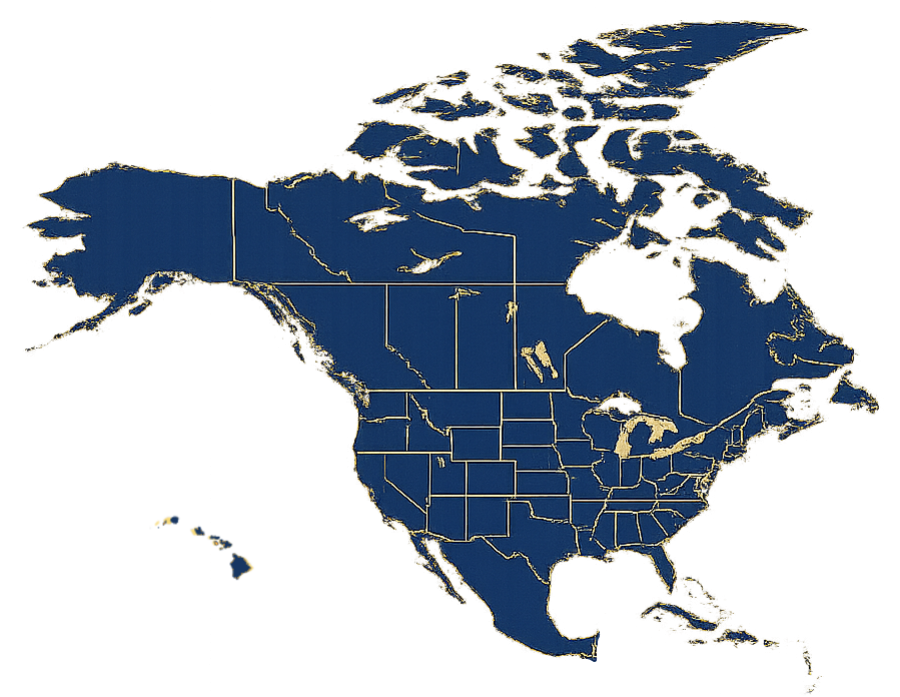
Massage Therapy Regulation & Requirements in North America
(U.S., Canada, Mexico & the Caribbean)
UPDATED MARCH 2026
← Scroll across to view all details on smaller screens →
Massage Therapy Regulation & Requirements in North America
(U.S., Canada, Mexico & the Caribbean)
QUICK LINKS:
UPDATED MARCH 2026
Massage therapy regulation in North America ranges from formal licensure frameworks to tourism-driven facility licensing and traditional practice. This overview highlights common regulatory patterns across the U.S., Canada, Mexico, Central America, and the Caribbean to support education planning and relocation. For country-by-country details, use the Global Regulation Lookup Tool.
North America at a glance
North America includes several distinct regulatory “models,” often shaped by healthcare systems, tourism economies, and local legal histories.
Model 1 — Statutory licensure and regulated professions (U.S. and Canada)
In the U.S., massage therapy regulation is primarily state-level, with most states requiring licensure and clearly defined education and exam pathways. In Canada, regulation is provincial, with regulated provinces using Colleges and structured entry-to-practice and renewal/QA expectations.
Model 2 — Facility oversight + vocational competency standards (Mexico)
Mexico commonly combines facility oversight (sanitary regulation for establishments) with vocational competency certification for individuals rather than a single standalone clinical license. This includes COFEPRIS oversight for establishments and SEP-CONOCER competency standards (EC codes) for specific massage skill sets.
Model 3 — Tourism-driven licensing + health department standards (parts of the Caribbean)
Across parts of the Caribbean, massage may be governed primarily through business licensing and health/safety standards tied to hospitality and spa services rather than a standalone healthcare profession license. Some islands also participate in vocational frameworks intended to support mobility (e.g., CVQ Level 3 in Massage Therapy in CARICOM contexts).
Model 4 — “Clinical glass ceiling” under physiotherapy scope (French Caribbean)
In French Caribbean territories, therapeutic and clinical massage can be restricted under French health law to physiotherapists (masso-kinésithérapeutes), with non-medical practitioners typically limited to wellness categories.
Model 5 — Ministry oversight + traditional/informal practice (parts of Central America)
In parts of Central America, dedicated statutory massage boards may be absent and oversight may occur through general ministry frameworks, while traditional manual healers (e.g., sobadores) remain culturally significant in many communities.
What to verify in North America
These are the North America “gotchas” that commonly affect relocation, education decisions, and scope.
- Jurisdiction level: state/province/territory vs national frameworks (U.S. & Canada differ).
- Facility vs practitioner regulation: Mexico often distinguishes establishment compliance from individual competency certification.
- Tourism vs clinical scope: some islands prioritize health/safety licensing for spas; clinical practice categories may be separate or limited.
- Physio-only restrictions: French-law territories can restrict clinical massage scope.
- Documentation norms: where competency/QA models are used, keep learning objectives + certificates organized for audits or mobility reviews.
Education and continuing education planning
If you’re entering the profession
Start by identifying whether your target jurisdiction regulates massage as a distinct profession (license/registration/protected title), and what education/exam pathways are required. Use the dedicated U.S. and Canada tools when those are your destinations.
If you’re maintaining credentials
Renewal education expectations vary. Some systems are hour-based; others are competency/QA-based or association/insurer-driven. Plan early and keep documentation clean (course objectives, certificates, format, hours).
Nations and regions with regulations will have active links to get more details.
Pinpoint CE Courses in North America
Pinpoint Education provides science-based continuing education for professional massage therapy designed with clear learning objectives and documentation— important where jurisdictions require CE/CPD records or competency/QA mapping. Acceptance varies by jurisdiction; confirm what qualifies with the relevant regulator, association, or insurer before enrolling.
Frequently Asked Questions (FAQ)
Is massage therapy regulated the same way across North America?
No. The region includes state/provincial licensure models (U.S./regulated Canada), facility and public-health oversight models (common in tourism-heavy areas), and jurisdictions with limited or decentralized frameworks. Use the Global Lookup Tool for country-by-country details.
Does “unregulated” mean massage is illegal?
Not necessarily. “Unregulated” usually means there is no dedicated professional licensing framework specific to massage therapy as a distinct profession. General business and consumer protection rules may still apply.
If I’m relocating, what should I verify first?
Identify the relevant authority (state/provincial board, ministry, registry, or official directory) and confirm whether requirements apply to the practitioner, the facility, or both. Then verify training expectations, any exam/registration steps, and renewal/CE rules where applicable.