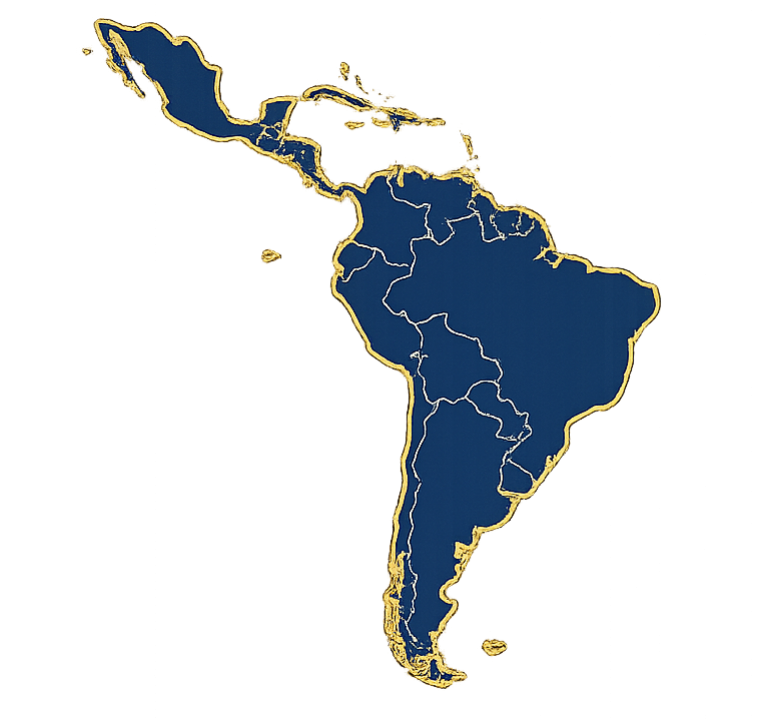
Massage Therapy Regulation & Requirements in South & Central America
(Latin America & the Guianas)
UPDATED MARCH 2026
← Scroll across to view all details on smaller screens →
Massage Therapy Regulation & Requirements in South & Central America (Latin America & the Guianas)
Massage therapy regulation across South and Central America is highly varied, ranging from older federal laws and vocational technician frameworks to ministry oversight, municipal permitting, and culturally rooted traditional practice. This overview summarizes common regulatory patterns that affect education planning, relocation, and scope boundaries. For country-by-country details, use the Global Regulation Lookup Tool.
South & Central America at a glance
Across much of South America, statutory licensure for independent massage therapists is often limited, emerging, or fragmented, and practice may sit at the intersection of wellness tourism, aesthetics/sports recovery, and traditional/manual medicine.
Central America often shares closely related cultural healing frameworks (e.g., sobada and curanderismo traditions), while formal oversight may occur through broader ministry or municipal systems.
Common regulatory patterns in this region
Model 1 — Older legal recognition with modern regulatory gaps (example: Brazil)
Brazil has early legal recognition (Law 3.968/1961) but a modern regulatory gap in oversight structures, leading to association-driven standards and inconsistent enforcement dynamics.
Model 2 — Active modernization and professionalization attempts (example: Argentina)
Some jurisdictions are actively modernizing the profession through updated legislation or bills aimed at defining titles, combating misuse, and integrating practice into formal systems.
Model 3 — “Auxiliary/complementary” health categorization (examples: Chile, Andean countries)
In parts of the Andes, massage may be categorized as an auxiliary or complementary health practice, often tied to ministry oversight and facility requirements.
Model 4 — Aesthetic-clinical convergence (post-op recovery + sports application)
A defining pattern in several countries is the convergence of massage therapy with aesthetic surgery recovery, lymphatic drainage, and sports medicine markets, creating “technical” roles even where independent statutory licensure is limited.
Model 5 — European-law territories with “clinical scope ceilings” (example: French Guiana)
Some territories bound to European health codes restrict therapeutic massage to physiotherapists, leaving independent practitioners in wellness-only categories with strict claim boundaries.
Model 6 — Traditional and intercultural health systems
Indigenous and Afro-descendant healing traditions remain central in many communities, and some national frameworks increasingly acknowledge intercultural systems that coexist with biomedical regulation.
What to verify in South & Central America
These are the North America “gotchas” that commonly affect relocation, education decisions, and scope.
- Is massage regulated as a distinct profession—or grouped under another health act?
- Is oversight practitioner-based, facility-based, or both? (common where spa/clinic licensing dominates)
- Are there restrictions on therapeutic/rehab claims due to physiotherapy/kinesiology scope boundaries? Physio-only restrictions: French-law territories can restrict clinical massage scope.
- Is practice categorized as auxiliary/complementary, aesthetic/technical, or wellness?
- If relocating: confirm documentation expectations (education proofs, competency certificates, insurance requirements where applicable).
Education and CE/CPD planning in this region
Renewal education requirements vary widely and may be less standardized than in U.S./regulated Canada frameworks. In many jurisdictions, professional expectations may be shaped by employers, associations, insurance reimbursement norms, or ministry/facility standards rather than a single national CE authority.
Pinpoint CE Courses in South & Central America
Pinpoint Education provides science-based continuing education for professional massage therapy designed with clear learning objectives and documentation— important where jurisdictions require CE/CPD records or competency/QA mapping. Acceptance varies by jurisdiction; confirm what qualifies with the relevant regulator, association, or insurer before enrolling.
Frequently Asked Questions (FAQ)
What kinds of regulation models are common in South & Central America?
Regulation varies by country, but common patterns include ministry or municipal oversight, technical/vocational recognition for certain roles, and facility-focused rules for spas/clinics. Use the Global Lookup Tool to confirm the framework for a specific country.
Why is massage sometimes categorized under wellness, aesthetics, or post-operative care in this South America?
In parts of the region, massage therapy gains legitimacy through service categories and settings (spa/hospitality, sports, aesthetics, recovery) rather than a standalone healthcare-profession license. That can affect permitted titles, scope language, and what claims are allowed, so local rules should be verified before advertising therapeutic outcomes.
What should I verify first if I’m planning to work or train in a specific country here?
Start with:
(1) who sets the rules (ministry vs municipality vs registry),
(2) whether oversight is practitioner-based or facility-based
(3) any scope limits where rehabilitation/medical claims overlap with physiotherapy or kinesiology
Then confirm training/documentation expectations and renewal/CE rules where applicable.
Does “unregulated” mean massage is legal in that country?
With caveats. “Unregulated” means there’s no clear profession-specific licensing framework for massage therapy. In some countries, oversight may still occur through municipal permitting or facility rules for clinics/spas, even if individual practitioner licensure isn’t defined, so local verification is still important.